
On 15th December 2025, a press release from the Department for Education set out a significant package of investment in post-16 education and skills, focused on expanding college capacity and technical training provision.
With more than £570 million earmarked to expand training facilities and extend capacity in further education, the announcement reflects the government’s response to acute skills shortages and demographic pressures that are shaping education policy and college planning across England.
The funding, part of a broader post-16 skills agenda, will be devolved in part to local leaders to create training places that align with regional labour market priorities. It’s hoped that this will help to meet demand from an expected increase of around 67,000 extra 16 and 17-year-olds entering post-16 education by 2028. Central to the package is the expansion of technical pathways, including applications opening for the next wave of Technical Excellence Colleges (TECs) in priority sectors such as digital and technologies, clean energy and advanced manufacturing.
This announcement is grounded in a wider government strategy articulated in the recent Post-16 Education and Skills White Paper, the most extensive reform of the further education and skills system in a generation, which emphasises technical excellence, employer collaboration and ensuring that education pathways are aligned with labour market needs.
Taken together, these policy developments place new imperatives on colleges. They are being asked to respond to curriculum and demographic shifts with a built environment capable of delivering high-quality, flexible and future-focused training at pace. That context invites a closer look at how capital funding and policy ambitions translate into physical space, and, crucially, how estates teams and trustees navigate the practical challenges of delivery.
Capacity Growth and Estate Constraints
Few college leaders will dispute the rationale behind increased funding for technical and vocational education. Yet funding itself does not deliver training places, whereas tangible facilities do. The £570 million announcement reflects an acknowledgement from government that systemic capacity constraints, in space and specialist facilities, have hampered the sector’s ability to scale provision in line with demand.
The Association of Colleges found that almost one in three colleges had limited or closed certain apprenticeship courses in construction because of staffing or space pressures.
Estate planning in further education has long been troubled by the competing demands of live campuses, tight programme timelines and the need for specialised environments. Digital, engineering and advanced manufacturing facilities require robust infrastructure, controlled environments and adaptable space configurations if they are to mirror industry standards. The risk for colleges is that traditional capital programmes, which can take many months from concept to handover, may fall out of synchronisation with policy cycles and labour market shifts.
Constructing Specialist Teaching Spaces
Policy emphasis on training capacity heightens the urgency for delivery models that combine certainty of programme, delivery speed and future adaptability.
 For colleges planning new builds or major extensions, the challenge is to align these with funding timelines and minimise disruption to core teaching operations.
In this context, colleges increasingly consider alternative delivery methodologies that sit between conventional construction timelines and off-site manufactured solutions. The appeal of accelerated methods includes speed as well as the ability to integrate complex operational requirements, such as high-spec data, ventilation, workshop rigour and collaborative learning spaces, without sacrificing building quality or long-term flexibility.
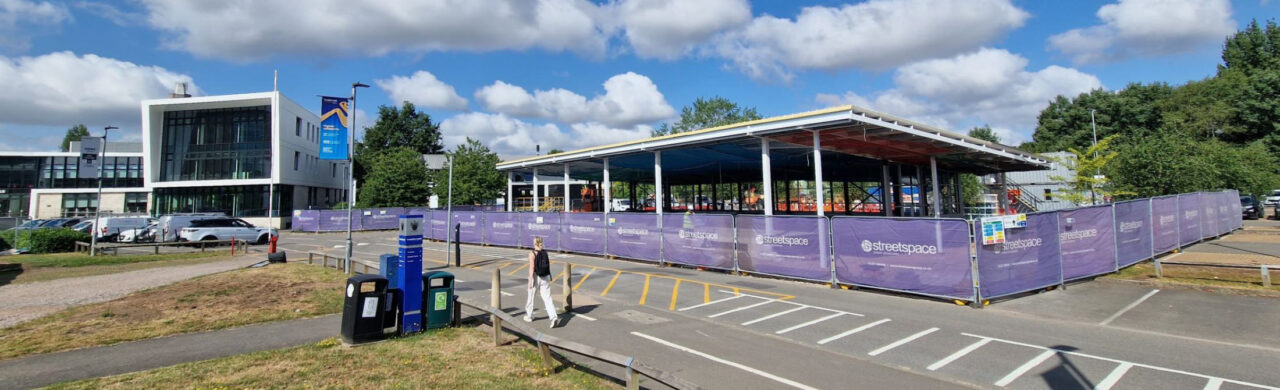
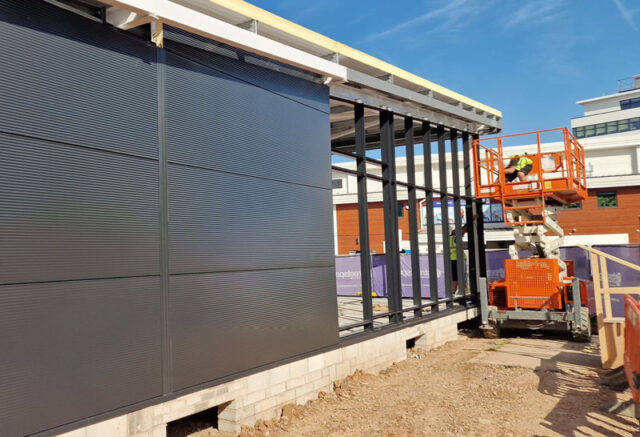
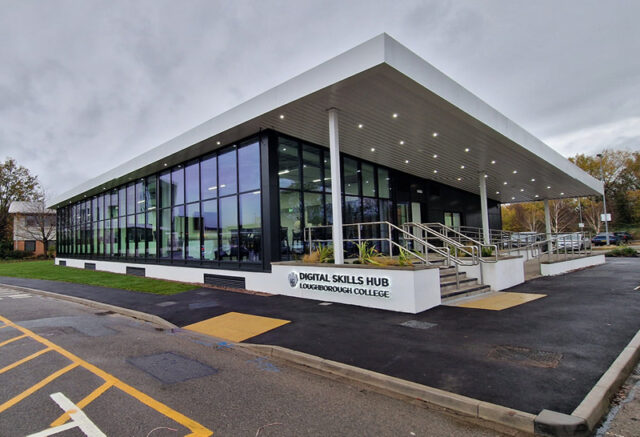
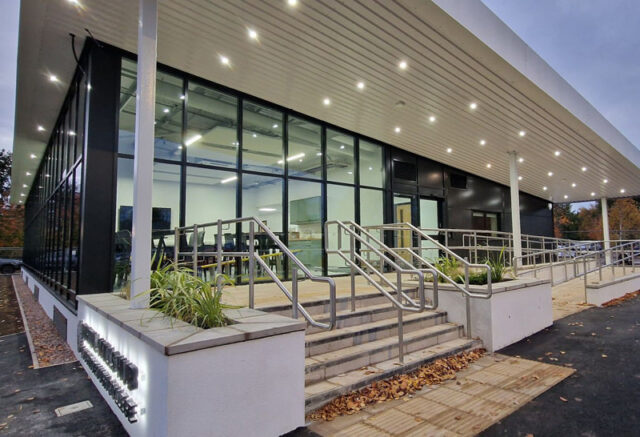
Real examples from recent education projects illustrate this dynamic. At Loughborough College, a bespoke digital skills facility was delivered within a constrained timeframe on a live campus, offering flexible classrooms and specialist computing spaces that reflect industry practice. Close coordination during construction ensured teaching continued unhindered and spaces were fully operational ahead of a scheduled opening.
What This Means For College Estates Teams
With structural reform and capital investment in the spotlight, colleges need to think of capital programmes as strategic instruments, not discrete projects triggered solely by funding announcements. Key considerations include:
- Alignment with regional skills strategies: Funding devolved to local authorities and mayors will require clear articulation of how estate development aligns with local economic priorities and employer needs.
- Future-proofing facilities: Specialist spaces should accommodate evolving technology and pedagogical models, not just immediate curriculum requirements.
- Risk-managed delivery: On live campuses, maintaining continuity of teaching and minimising operational disruption are essential to institutional reputation and learner experience. The choice of delivery methodology should reflect those priorities.
- Integration with curriculum design: Facilities must be designed in close consultation with curriculum teams to ensure they support learner progression and employer engagement.
The policy momentum underpinning the current skills and further education agenda signals an unprecedented focus on post-16 training across sectors, ranging from construction to digital technologies. For colleges, converting this moment of political and fiscal focus into meaningful expansion, will require strategic planning and tactical clarity about delivery pathways. The conversation around the built environment sits at the heart of how education institutions translate broad policy direction into physical places for learning.
Understanding how different delivery approaches perform in live college environments becomes increasingly important. ZONE works with further education providers to help translate funding, policy and curriculum ambition into high-quality, adaptable teaching spaces delivered with certainty. Find out more about what can be achieved depending on size, use and budget, at ZONE Design. Build.