
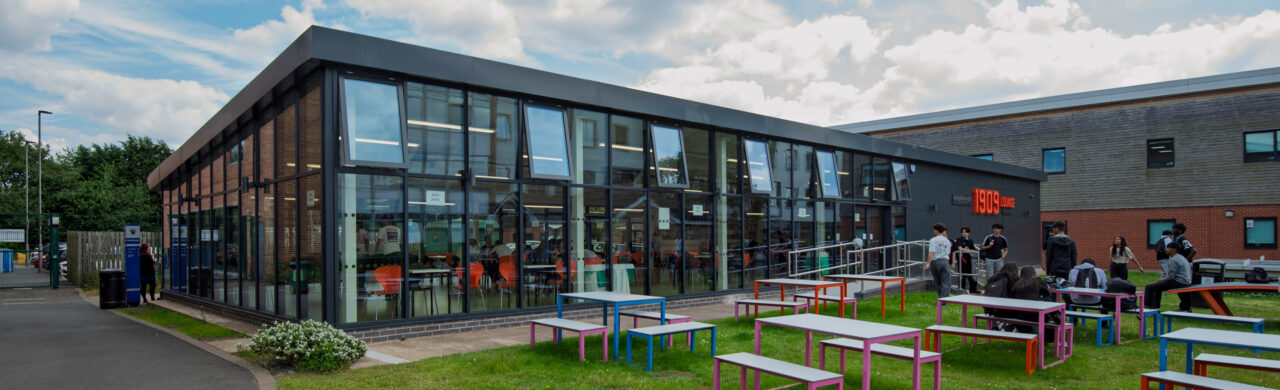
In the state school and academy sector, post-16 provision is growing in importance. Whether as a route to higher education, apprenticeships or employment, the two years of sixth form represent a critical transition. However, many schools still treat Year 12 and 13 as simply the upper years of the main school, rather than as a distinct phase of learning which demands its own environment, culture and facilities.
State schools and academies face increasing pressures, including 16+ recruitment and retention, evolving student expectations and Ofsted scrutiny. As such, investing in dedicated sixth form facilities is vital. A well-designed, separate sixth form space signals a change which supports better pupil engagement and wellbeing. If a school’s sixth form is to offer a distinctive, aspirational experience, the physical space really matters.
Rethinking Sixth Form Provision
State schools and academies often operate with legacy sites, constrained space and multiple competing priorities. Sixth formers may share buildings with younger students or have little perceptible difference in their everyday environment compared to pupils in Years 7–11. In these cases, the maturity and independence that should be associated with sixth form are somewhat undermined.
Pupils and parents rightly have high expectations for quality provision. While recruitment and retention pressures remain more visible in the independent sector, state sixth forms must also compete with dedicated sixth form colleges, FE providers and early employment routes. The challenge for schools is to deliver excellent teaching while also creating an environment that feels purposeful and distinct from the rest of the school.
Changing Student Expectations
Today’s sixth form students increasingly expect a college-style environment that offers freedom, flexibility and a clear step up from school life. Adaptable, multi-use areas allow schools to deliver seminar-style teaching, group collaboration and quiet study within the same footprint. These spaces can mirror the experience of higher education or the workplace, encouraging students to manage their own time and learning. Schools that fail to modernise their sixth form facilities risk falling behind as students compare their offer with that of other local providers.
Better Buildings, Better Outcomes
Evidence from an evaluation of school performance, before and after moving into new or refurbed facilities, shows that better buildings directly contribute to improvements in teaching quality, student achievement and staff morale.

The study indicates that inadequate or ageing sixth form spaces make it far harder to raise standards or deliver the independent learning experiences that post-16 education demands. Meanwhile, modern, purpose-built environments allow teaching to flourish, with measurable gains in lesson quality and student outcomes.
One secondary school in the report, recorded that after relocating to a new building, 100% of sixth form lessons were graded good or better, an improvement of more than 30% on the previous inspection.
The evidence that physical space has a direct impact on educational performance is clear. Sixth form settings should reinforce a school’s culture and support the higher expectations desired in post-16 education.
Achieving Ofsted Excellence
Insights from sixth form settings graded by OFSTED as ‘Outstanding’, note that outstanding provision is built on consistency, high expectations and environments that encourage students to take pride in their learning. A well-designed sixth form centre supports quality-first teaching, strong relationships and personal development programmes that students genuinely want to attend.
Space plays a defining role in creating the atmosphere OFSTED describes as “demanding yet respectful,” where post-16 students feel motivated and treated as young adults. Purpose-built facilities in ‘Outstanding’ sixth form settings, allow for the delivery of a rich curriculum, wider enrichment activities and careers guidance that meet the full expectations of the inspection framework.
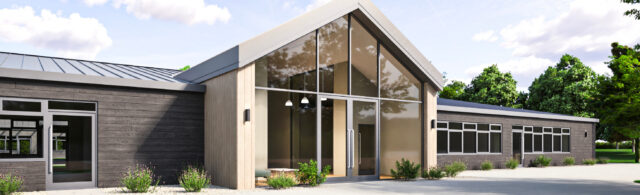
Delivering Quality with ZONE Design & Build
Traditional construction can make improvement projects complex and disruptive, with design consultants, contractors and costs managed separately. ZONE Design. Build offers a more streamlined approach for sixth forms settings, combining design, engineering and construction within a single, coordinated process.
By managing every stage in-house, ZONE delivers predictable costs, shorter programmes and minimal disruption to school life. Off-site fabrication and carefully planned on-site works mean new facilities can often be completed within term-time windows. Whether creating a stand-alone sixth form centre, extending an existing building or re-purposing internal space, ZONE provides solutions tailored to school budgets and priorities.
The result is a high-quality, future-proof environment that supports academic focus, social development and wellbeing, helping schools deliver the standards, atmosphere and outcomes that post-16 education deserves. Take a look at some of the standalone sixth form installations completed in recent years, supporting the need for excellent spaces for our post-16 learners.